Physical Address
304 North Cardinal St.
Dorchester Center, MA 02124
Physical Address
304 North Cardinal St.
Dorchester Center, MA 02124


Daniel writes at the intersection of infrastructure, design, and public practicality. Rather than treating mobility as a technical niche, he explores it as one of the clearest windows into how seriously a city values time, accessibility, and quality of life.
His pieces often compare cities known for transport strength — including Tokyo, Seoul, Amsterdam, Copenhagen, Vienna, and Singapore — to uncover what makes systems intuitive, reliable, and widely used. He is especially interested in why some places turn sustainable mobility into normal life while others leave it as a policy aspiration.
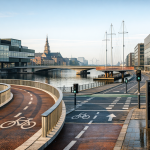
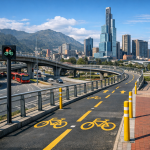
Daniel looks beyond maps and promotional renderings. He pays attention to service frequency, route clarity, station usability, protected bike lanes, intermodal integration, pedestrian access, and the countless practical details that determine whether people actually choose sustainable transport.
Readers value his work for being concrete and grounded. Instead of discussing mobility in abstract terms, he translates infrastructure into lived experience: missed connections, smoother commutes, safer cycling, shorter travel times, and fewer daily compromises.
Within Urborough’s editorial voice, Daniel has become known for calm, rigorous breakdowns of transport topics that are often discussed emotionally but explained poorly. His articles are especially popular with readers interested in cycling policy, transit reform, and the hidden reasons a system feels seamless in one city and chaotic in another.
His work is frequently appreciated for cutting through surface-level praise and identifying the practical design choices that matter most to riders and commuters.
When visiting a new city, Daniel’s instinct is rarely to start with monuments. He heads first to the station, the tram stop, the bike lane network, or the main transfer point. He enjoys testing how naturally a city reveals itself through movement: whether routes are legible, whether cycling feels protected, and whether public transport serves ordinary neighborhoods as well as tourist cores.
Outside of writing, he enjoys route mapping, urban photography, and documenting the small details of functional infrastructure — from station signage to curb design to the quality of bike parking near transit hubs.
Daniel writes for readers who care about how cities function in motion. His work is aimed at people who want to understand not just which city has a famous metro or cycling culture, but why those systems succeed and what lessons other places can realistically adopt.